AS2070: Aerospace Structural Mechanics
Jan-May, 2026
Table of Contents
Introduction
| n, p | Next/Prev tab |
| <, > | Scroll to top/bottom |
| j, k | Incremental scroll |
| -, + | Collapse/expand all |
| c, e | Collapse/expand subheadings |
Instructor, TA, and the basics
- Dr. Nidish Narayanaa Balaji
- nidish@iitm.ac.in, Room 139 AE building
- TA: Niranjan Gulla, Poorvika U.
- Textbook References
- Module 1
- Module 2
- Module 3
- This website does have some notes that I have prepared, but note that these are more for my reference than yours.
- You should assume that they come with mistakes that I will rectify as the semester progresses.
- Your primary references must only be your textbooks.
Some Planning
The lectures will be split into three modules:
Sno. Topic Lectures Assignments 1 Elastic Stability 11 1-2 2 Laminated Composites 11 1-2 3 Introduction to Failure 11 1-2 Total 33 3-6 - The weekly split-up (nominally) is
- 3 Lectures
- 1 Tutorial
- The weekly split-up (nominally) is
Grading Policy
- The End Semester Examination will carry 40% weightage for the overall.
- The quizzes (together) will carry 30% weightage.
- The assignments (together) will carry 15% weightage.
- A Course Project will carry 15% weightage.
The weighted overall grades will be scaled by the maximum score. A letter grade will be assigned based on the following rubric.
[95, 100] [85, 95) [75, 85) [65, 75) [55, 65) [45, 55) Grade S A B C D E
Honor Code Policy
Honor Code Policy
You are required to sign an honor code for each submission, failing
which evaluation will not be done.
Upon my honor I state that I have received no unauthorized support and can attest that the submission reflects my understanding of the subject matter.
- The honor code may be signed either by hand or just initials (in case of typed submission), but the key is that you should mean it.
- Honor code violations will not be taken lightly.
Assignment Policy
- Each module will have at least one assignment and at most 2.
- Late Submission Policy
- No late submissions will be encouraged. If you miss the deadline, you miss the submission.
- Exceptions will be considered only if I receive written communication through Moodle before the submission date.
Course Project
- The first week of classes will provide an executive overview of the three modules to be taught in the class.
- You will be given one week's time to decide which module you want to work on for your project.
The problem statement for the project is:
Develop an experimental demonstration of pedagogical value that highlights some of the concepts covered in class.
- I will group you in teams of 5-6 based on your preferences.
- The deliverables are:
- a demonstration of the experiment.
- a 15 minute presentation to class.
- a 1-2 page summary (keep this very brief).
Attendance Policy
- We shall try to use the DiGii app for attendance. If this does not work, I will be using an Attendance App on a tablet to record attendance.
- My app logs the time of press also, so attendance will be computed as the ratio of the number of seconds spent in class and the total number of class hours.
- Please be aware of institute policy regarding attendance matters, I can not provide any flexibility here.
Module 1: Elastic Stability
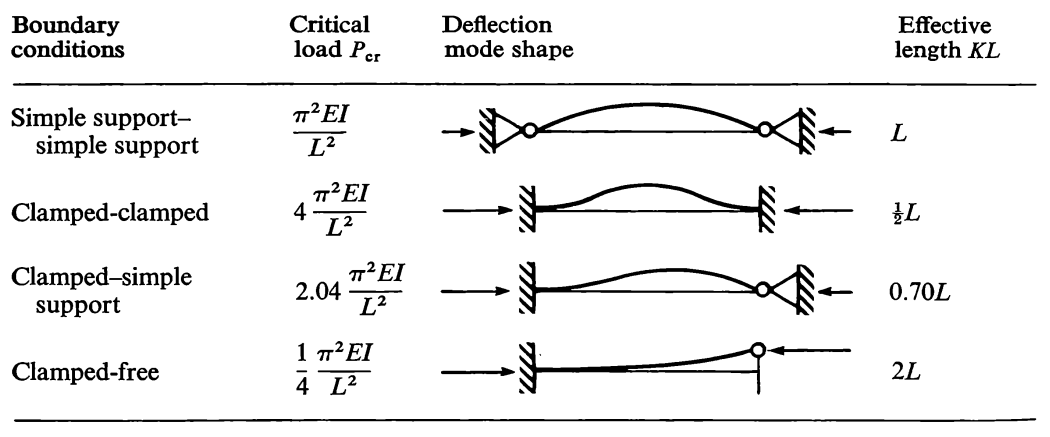
Figure 1: Table from [1]
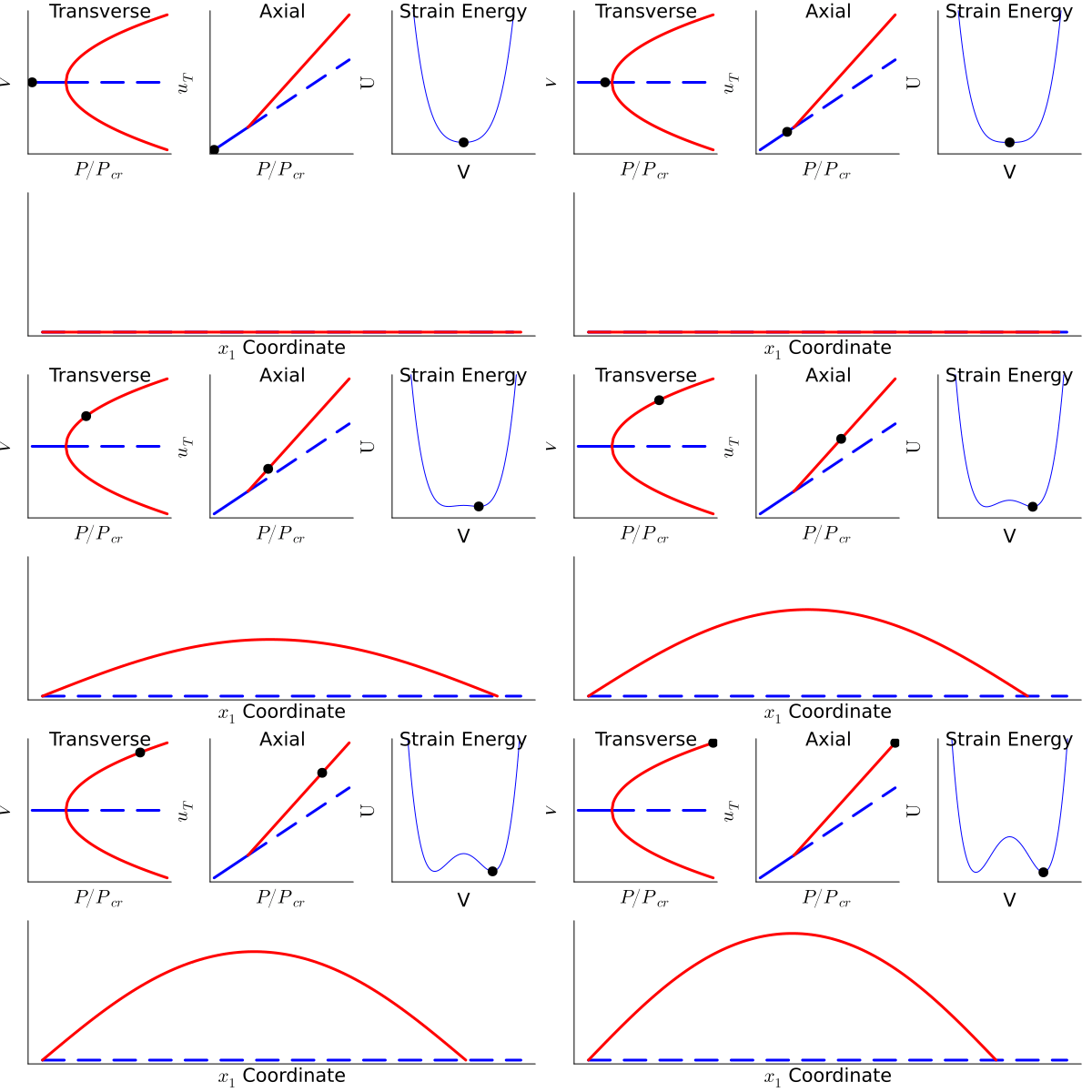
Figure 2: (Elastic) Post buckling of simply supported column
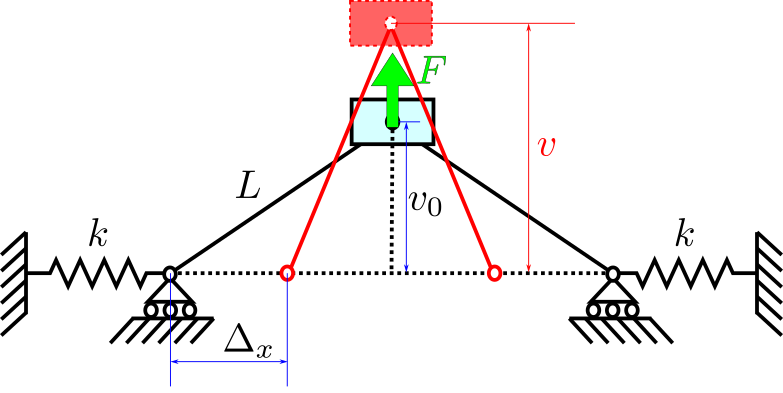
Figure 3: Snap-through example from [8]
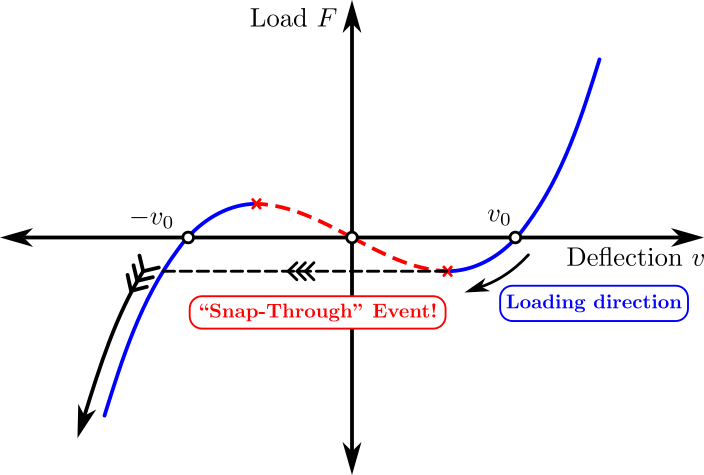
Figure 4: Load-deflection diagram for the SDoF snap-through example
Overview
- What is stability?
- Buckling of columns
- Energy Perspectives to Stability
- Snap-Through Buckling
- Flat Plates
Module 2: Laminated Composite Mechanics
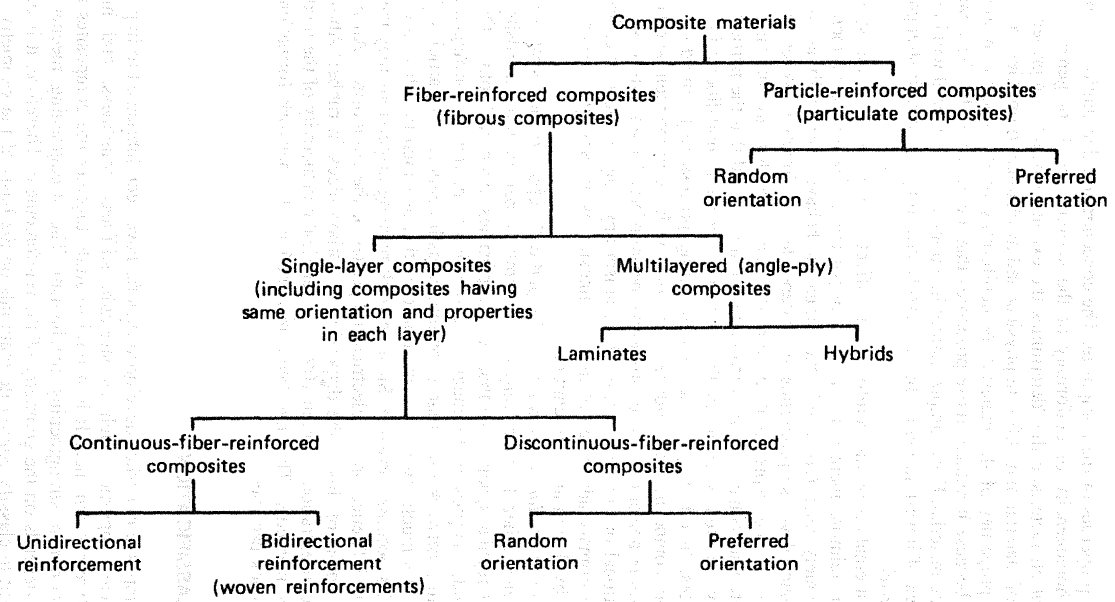
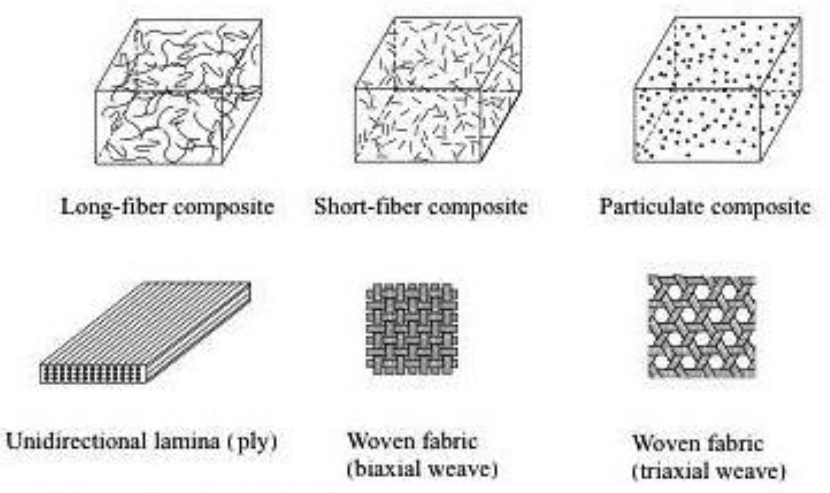
Overview
- Classification of composite materials
- Continuous fiber composite laminate
- Interlaminar strength is matrix dominated.
- Woven fiber composites
- Strength compromized but no risk of delamination.
- Chopped fiber composites
- Poorer strength but cheaper.
- Hybrid composites
- Sandwich structure
- High strength faces bonded through a lightweight foam/honeycomb core.
- High flexural stiffness-to-weight ratios.
- Continuous fiber composite laminate
- Materials in Composites
- Fibers
- Fiberglass-Reinforced Plastics (FRPs)
- Low cost, "basic" composites
- "Advanced" composites: Carbon, SiC, aramid polymer, etc.
- Higher modulus, strength; lower density.
- Carbon Nanotubes, Nanofibres.
- Fiberglass-Reinforced Plastics (FRPs)
- Matrix, Filler
- Polymers
- Thermosets: Epoxy, Polyester, etc.
- Highly cross-linked 3D molecular network which doesn't melt again.
- Thermoplastics: Polyetherketone (PPEK), PolyPhenyl Sulphide (PPS), etc.
- Polymer chains that do not cross-link. Will melt, can be reshaped.
- Thermosets: Epoxy, Polyester, etc.
- Metal, ceramic, or carbon matrix for higher temperature applications.
- Polymers
- Fibers
- Effective Moduli, Effective Strength.
- Constitutive relationships.
- Classical Laminate Theory (Subject to Time)
Module 3: Introduction to Failure
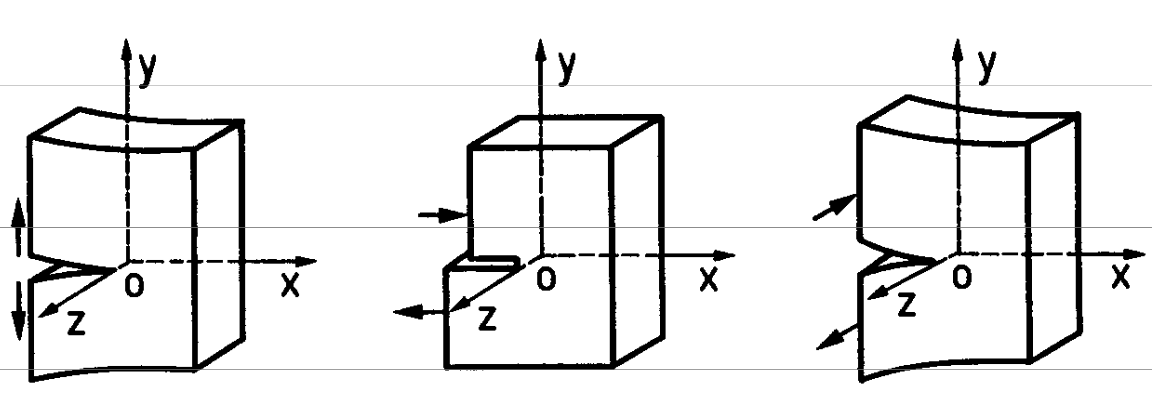
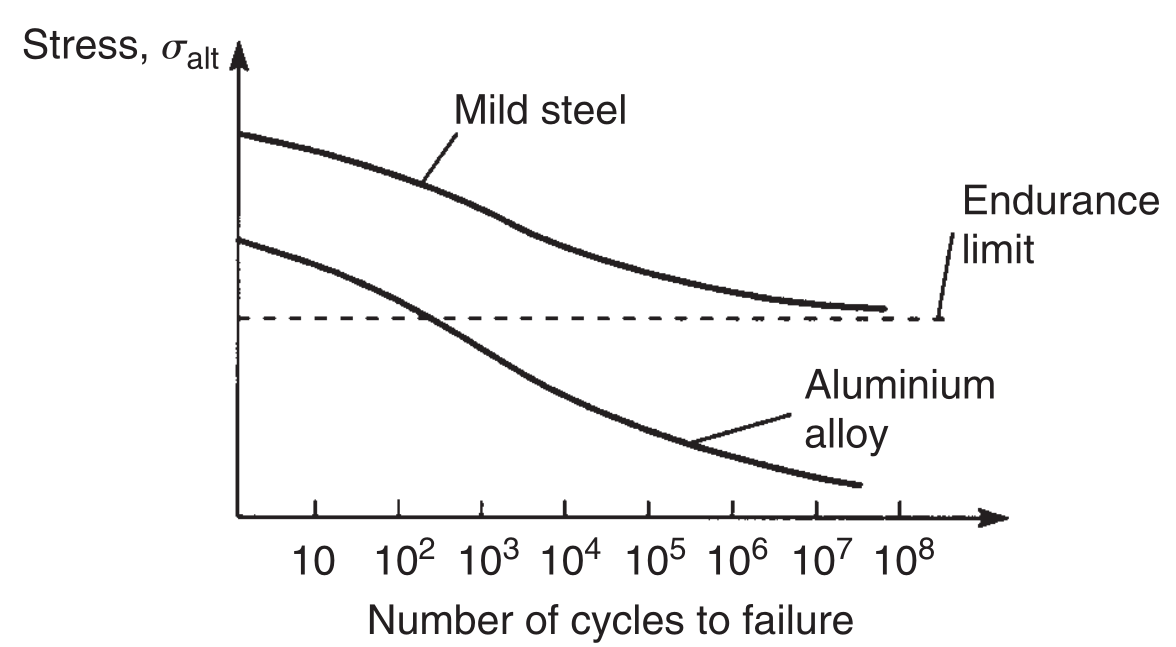
Overview
- Structure of Materials
- Lattice, Defects
- Introduction to Fatigue
- S-N Curve
- Miner's Rule
- Stress Concentration
- Introduction to Fracture Mechanics
- Modes of Fracture
- Crack Growth
Michell Solution
Maxima Worksheets
- airycyl.mac : Routine to compute stresses and displacements from given stress function.
- notch.mac : Works out solution for the notch case using
airycyl.mac.
Box Beam Sizing Tutorial
Overview
This tutorial is meant as an introduction to the design process involving much of what is learnt in this class (specifically modules 1 and 3).
Course Project
2026 Project Groups and Modules
| ID | Group | Module |
|---|---|---|
| ae24b008 | 1 | 1 |
| ae24b001 | 1 | 1 |
| ae24b021 | 1 | 1 |
| ae24b017 | 1 | 1 |
| ae24b003 | 1 | 1 |
Group 1
- Project Module: Module 1
- Project Title: TBD
| ID | Group | Module |
|---|---|---|
| ae24b022 | 2 | 3 |
| ae24b027 | 2 | 3 |
| ae24b023 | 2 | 3 |
| ae24b016 | 2 | 3 |
| ae24b024 | 2 | 3 |
Group 2
- Project Module: Module 3
- Project Title: TBD
| ID | Group | Module |
|---|---|---|
| ae24b002 | 3 | 2 |
| ae24b012 | 3 | 2 |
| ae24b011 | 3 | 2 |
| ae24b020 | 3 | 2 |
| ae24b007 | 3 | 2 |
Group 3
- Project Module: Module 2
- Project Title: TBD
| ID | Group | Module |
|---|---|---|
| ae24b019 | 4 | 1 |
| ae24b005 | 4 | 1 |
| ae24b018 | 4 | 1 |
| ae24b009 | 4 | 1 |
| ae24b013 | 4 | 1 |
Group 4
- Project Module: Module 1
- Project Title: TBD
| ID | Group | Module |
|---|---|---|
| ae24b026 | 5 | 2 |
| ae24b010 | 5 | 2 |
| ae24b028 | 6 | 2 |
| ae24b030 | 5 | 2 |
| ae24b004 | 5 | 2 |
Group 5
- Project Module: Module 2
- Project Title: TBD
| ID | Group | Module |
|---|---|---|
| ae24b006 | 6 | 3 |
| ae24b015 | 6 | 3 |
| ae24b029 | 6 | 3 |
| ae22b105 | 6 | 3 |
Group 6
- Project Module: Module 3
- Project Title: TBD
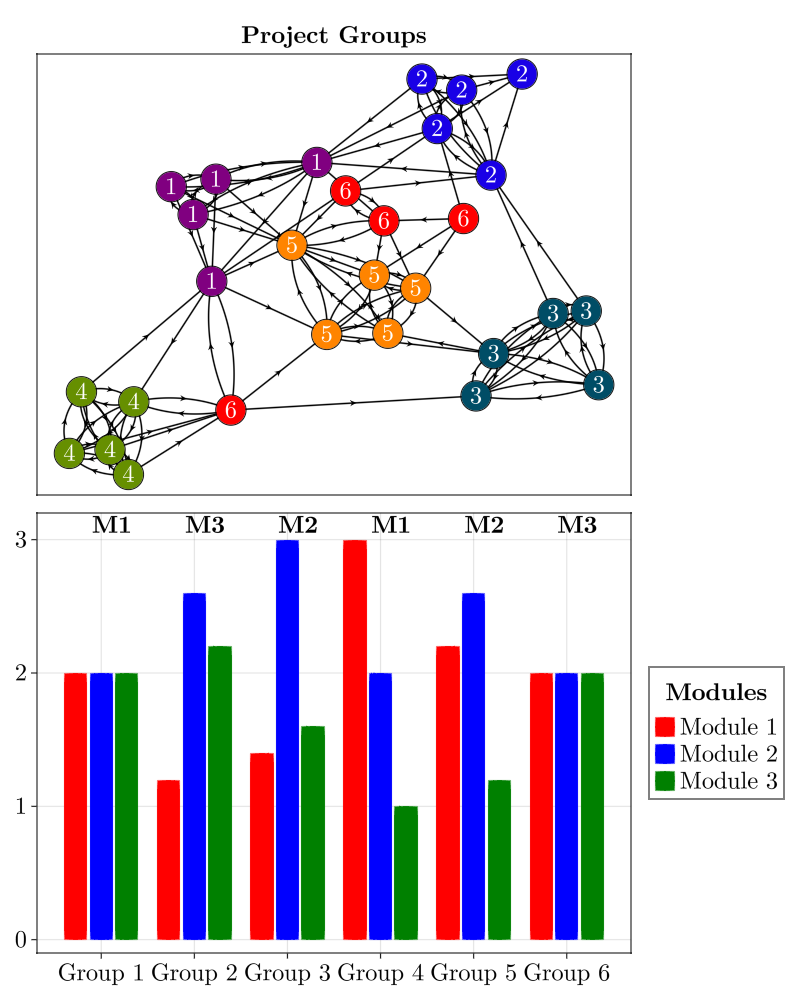
The process of group sorting
- I created an undirected graph by symmetrizing the adjacency preferences. 0.5 weight for a given student student wanting to work with another, and 0.5 weight for any student to want to work with the given student.
- I computed the eigenvectors of the associated graph Laplacian and conducted hierarchical clustering in the spectral space (I used 3 eigenvectors for this, second to fourth).
- I cut the resulting dendrogram tree to get 6 clusters in total.
- This already yielded 3 groups of 5 members each, so I froze these.
- Next I used the remaining nodes and computed the graph Laplacian again (within each other). Using the signs of the components of the Fiedler vector (leading eigenvector), I was able to obtain one group of 5 members.
With the remaining (9), I once again constructed a Fiedler vector and used its value to sort the nodes. The nodes with the smallest 4 values are assigned to be one group, and the remaining 5 nodes are assigned another.
Figure 5: Adjacency graph plotted using the the spring/repulsion model of Fruchterman and Reingold (1991, doi 10.1002/spe.4380211102). Plotted below are the module preferences.
Past Project Reports
The reports and presentation (where available) of projects from past semesters are documented here. Do have a look and reach out to your seniors to understand what they would do differently, given their experience.
Jan - May 2025